
Short answer
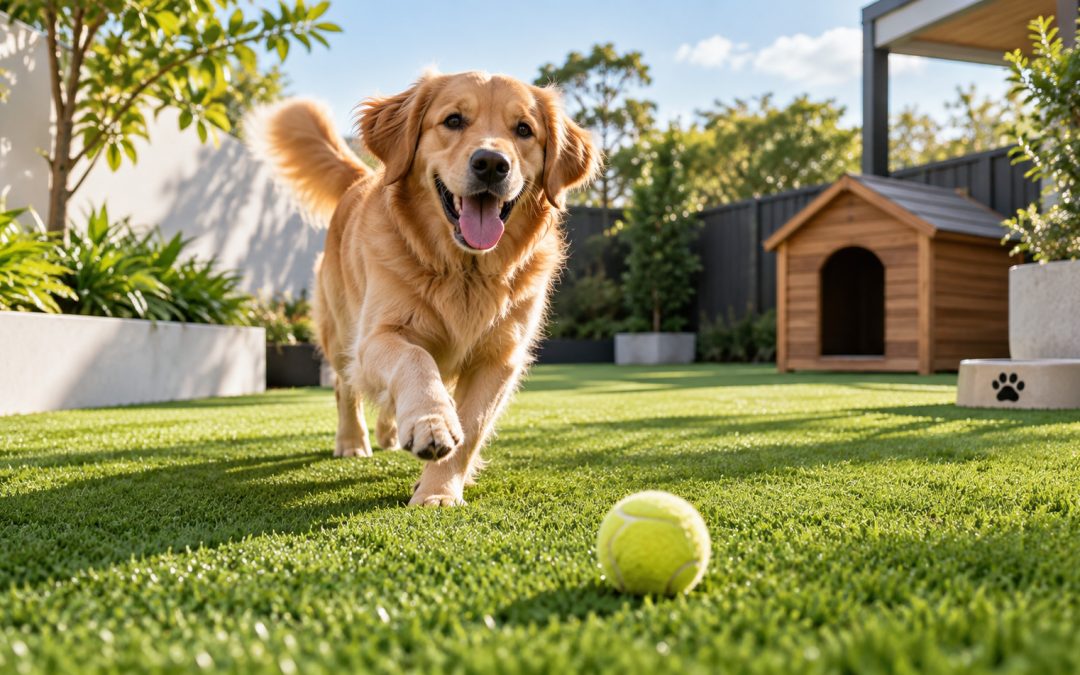
Artificial grass works well for most dogs. No mud, no dug-up patches, no brown wee spots. The catch is smell, and that’s almost always down to drainage and cleaning, not the grass. Choose a pet-specific grass, lay it on a base that drains properly, and hose and clean it regularly, and it stays fresh.- Smell comes from urine residue building up in the infill and base, not from the grass fibres
- Pet grass uses a shorter, denser pile and a backing that drains fast
- The base underneath matters as much as the grass. Urine has to drain away, not sit
- A weekly hose and a regular enzyme clean stop most odour
The pros: why dog owners switch
- No more brown spots — dog urine is high in nitrogen, which burns real grass and leaves dead yellow patches. Artificial grass doesn’t die.
- No mud — no worn tracks along the fence line, no mud after rain, no muddy paws on the couch.
- Less digging — a shorter, denser pet grass over a well-secured base is much harder to dig through than soil.
- Year-round — it looks the same in July as in January, however hard the dog runs on it.
The cons, honestly
- It can smell — if urine can’t drain away, or residue builds up, it will smell, especially in hot weather. This is the number one complaint, and it’s fixable (see below).
- Heat — in full summer sun artificial grass gets much hotter than real grass, hot enough to hurt paws. Shade and a hose-down before use make a big difference. [Link to heat article.]
- You still have to clean up — solids don’t disappear. Pick up as you would on a real lawn, and hose the spot afterwards.
- It costs more to do properly — a proper pet set-up (the right grass, a draining base, the right infill) costs more than a basic landscape job. It’s worth it.
Why does artificial grass smell with dogs?
Urine soaks through the grass into the infill and the base underneath. If it drains away and gets rinsed regularly, there’s no problem. If it sits there, bacteria break it down and release ammonia, the sharp smell people notice on a hot day. So the fix comes down to a few things: the infill used, how fast it drains, what it drains into, and how often you rinse it through.
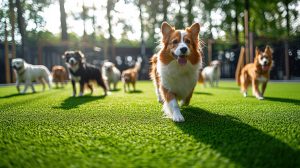
Pet grass installed in a Doggy DayCare – Adelaide
How do I stop artificial grass smelling ?
- Start with the right grass. Pet grass has a shorter, denser pile that’s easier to rinse and harder to dig, and a backing designed to let liquid through quickly. A long, soft landscape grass traps more. [Link to /residential/pet/ — Enduroturf’s pet range / Pet Premium System: confirm current product names.]
- Get the base right. Underneath the grass you want a compacted base of crushed rock or road base that drains, not clay or packed soil that holds liquid. On concrete, make sure there’s a fall so water runs off rather than pooling. This matters more than anything else on this list.
- Use a pet-friendly infill. Some infills are designed to absorb and neutralise ammonia (zeolite is a common one) or to resist bacteria. They sit in the pile and deal with odour at the source. [Glen: which infill does Enduroturf recommend for pets?]
- Keep a simple routine:
- Daily: pick up solids and hose the spot
- Weekly: hose down the areas your dog uses most. More often in hot weather or with more than one dog
- Every few weeks: an enzyme cleaner made for artificial grass, worked into the pile. Enzymes break down the residue instead of masking the smell
- Avoid bleach and harsh household cleaners. They can damage the grass and don’t fix the cause
Is artificial grass safe for dogs?
Yes, with a couple of commonsense precautions. Keep some shade over the area and water available on hot days, and check the surface with the back of your hand before letting your dog out in summer. If your dog is a determined chewer, watch the edges and joins while they get used to it.
Not sure which pet grass suits your yard?
We highly recommend you get samples posted to your door and feel the difference yourself
Which dogs and yards suit artificial grass best?
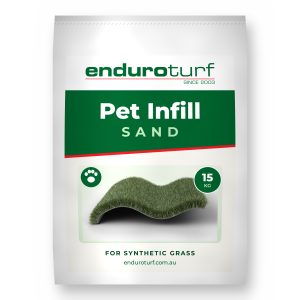
Pet infill sand (Zeolite)
It works best in small-to-medium yards where a real lawn gets destroyed: courtyards, townhouses, side runs and the dog’s favourite patch. For very large yards with one big dog, a mix works well: artificial grass where the dog spends most time, natural grass or garden beds elsewhere.
Glen’s take
“When someone tells me their artificial grass smells, the first thing I ask is what’s underneath it. Almost every time it’s been laid straight onto clay, or on a slab with no fall, and the wee has nowhere to go. Get the base draining and hose it once a week. I’ve got customers with three dogs whose yards don’t smell. It’s not magic, it’s plumbing”
— Glen Hannon, Founder, EnduroTurf
Frequently asked questions
Is artificial grass good for dogs?
For most dogs, yes. It ends mud, holes and brown urine patches. The key is a pet-specific grass, a base that drains, and regular cleaning.
Does artificial grass smell with dog urine?
It can, if urine doesn’t drain away or residue builds up. A draining base, a pet-friendly infill, weekly hosing and a regular enzyme clean prevent it.
What’s the best way to clean dog urine off artificial grass?
Hose the area regularly and use an enzyme cleaner made for artificial grass every few weeks. Enzymes break down the residue instead of masking it. Avoid bleach.
Can dogs dig up artificial grass?
It’s much harder than digging soil. A dense pet grass with secured edges over a compacted base stops most digging.
Does artificial grass get too hot for dogs’ paws?
In full summer sun it can. Provide shade, hose it down before use and check it with the back of your hand on hot days.
Ready to get started?
Order free samples, shop the range online, or give Glen a call. Real advice from a real person, no hard sell.
About the author
Glen Hannon founded EnduroTurf in 2003 and has worked on more than 20,000 artificial grass projects across Australia, from backyards and schools to Suncorp Stadium and Wet’n’Wild. Got a question about your project? Call Glen on 0481 882 137.
Keep reading: CHOICE — Should you get artificial grass? · University of Melbourne heat study ·